uk-saas·9 min read·
UK SaaS micro-entity accounts 2026/27: the £1m turnover threshold, FRS 105 vs FRS 102 Section 1A, and what to actually file at Companies House
Your accountant probably files full small-company accounts (FRS 102 Section 1A) by default. From April 2026, more UK SaaS founders qualify for FRS 105 micro-entity accounts after the £1m turnover threshold raised. The micro-entity route is shorter, cheaper, exposes far less detail to competitors, and saves £400-£900 a year on accountancy fees. Most solo SaaS founders should be filing FRS 105.
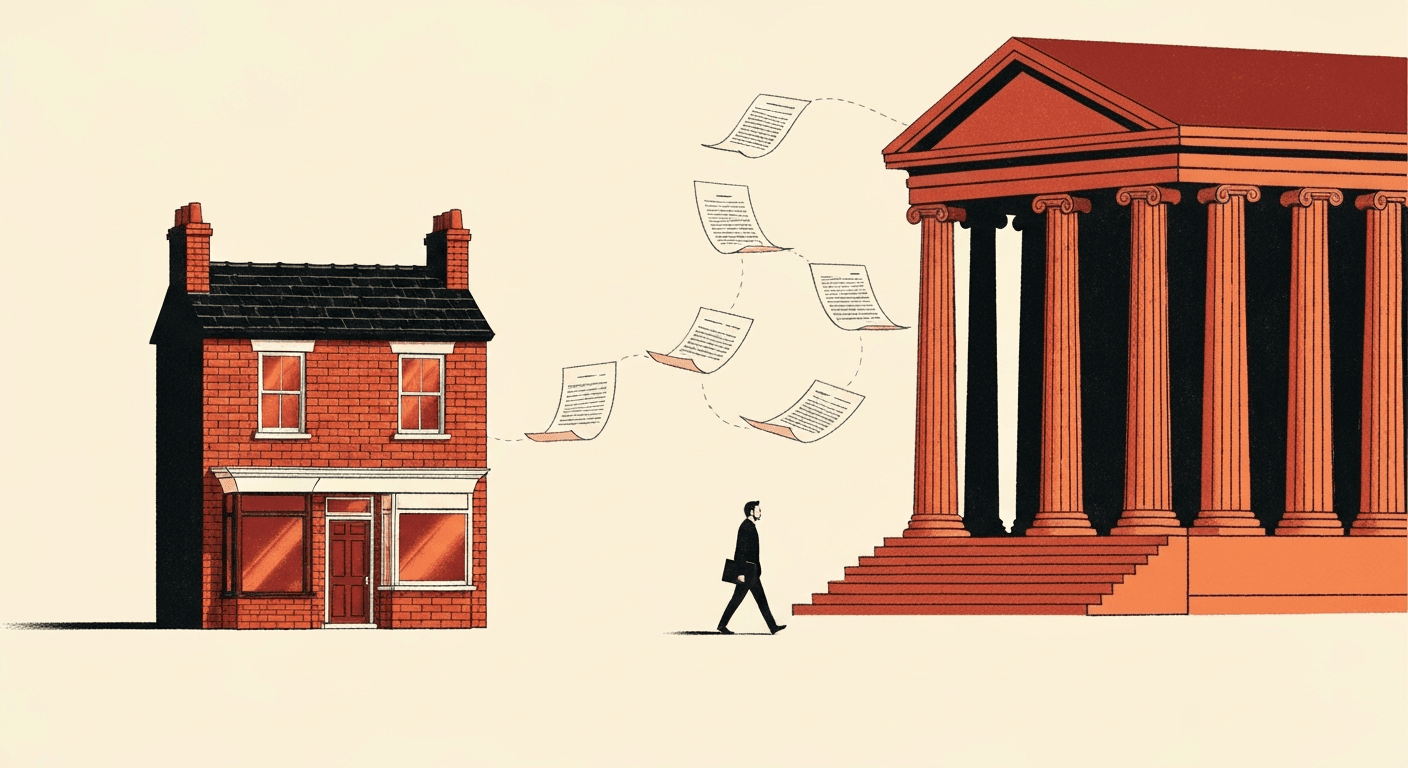
Your accountant probably files your annual accounts as FRS 102 Section 1A "full small-company" accounts. That's the default they reach for, because that's what they prepare for nine clients out of ten. From April 2026, most UK SaaS founders on this list shouldn't be on that default any more. The micro-entity threshold has just jumped to £1m turnover, and the route underneath it — FRS 105 — is shorter to prepare, cheaper to commission, and keeps almost everything that matters off the public Companies House file. We're talking £400-£900 a year in fees and a one-page balance sheet versus a five-page disclosure pack your competitors can read at lunchtime. If you're a solo or two-person SaaS Ltd turning over less than seven figures, FRS 105 is almost certainly the right call. Here's the full picture.
What changed in April 2026
The Companies (Reduction in Reporting Burdens) Regulations 2024 came into force for accounting periods beginning on or after 6 April 2026. The size thresholds for UK companies were lifted across the board for the first time in over a decade, mostly to undo the drift caused by inflation.
The new micro-entity ceilings:
- Turnover not more than £1,000,000 (up from £632,000)
- Balance sheet total not more than £500,000 (up from £316,000)
- Average number of employees not more than 10 (unchanged)
The new small-company ceilings:
- Turnover not more than £15,000,000 (up from £10.2m)
- Balance sheet total not more than £7,500,000 (up from £5.1m)
- Employees not more than 50 (unchanged)
Above small you're medium; above medium you're large and into FRS 102 in full plus a statutory audit. Most readers of this blog won't see those numbers for a long time. The relevant move for now is at the bottom: the micro-entity gate just opened wide enough that the average UK SaaS founder running a six-figure ARR business walks straight through it.
Who counts as a micro-entity
You qualify as a micro-entity for an accounting period if you meet at least two of the three size criteria above, in both the current period and the immediately preceding period. The two-period rule stops companies bouncing in and out of regimes year on year because of one good month.
A handful of company types are excluded regardless of size:
- Public limited companies (PLCs)
- Public-interest entities (listed firms, banks, insurers)
- Charities and community interest companies
- Financial institutions and FCA-regulated entities
- Investment undertakings, including some holding companies in groups
If you're a private limited company building a SaaS product on your own or with a co-founder, none of those apply. You're in.
FRS 105 — what you actually file
FRS 105 is the Financial Reporting Standard applicable to the Micro-entities Regime. It is deliberately stripped back. The accounts you prepare under it have:
- A statutory minimum balance sheet (one page)
- A simple profit and loss account (used internally and for tax — see below)
- Two or three short footnotes, mostly around director advances, guarantees and off-balance-sheet commitments
- No directors' report
- No statement of changes in equity
- No cash flow statement
- No detailed accounting policies note
- No related-party disclosures beyond directors' transactions
What goes to Companies House — and onto the public record — is even less. Under FRS 105 you only have to file the balance sheet plus the few statutory notes. The profit and loss account can be left out of the public filing entirely. So the world sees your assets, liabilities and shareholders' funds at a single date, and that's it. They cannot see your turnover. They cannot see your profit. They cannot see your dividends.
You still prepare a P&L for HMRC because corporation tax computations need one, but that goes via your CT600, not via Companies House.
FRS 102 Section 1A — what "full small-company" looks like
FRS 102 Section 1A is what most accountants produce by default. It's the small-companies subset of the main UK GAAP standard. The accounts pack typically contains:
- Directors' report
- Full balance sheet with comparative columns
- Profit and loss account (which can be filed in abbreviated form, but the figures are there)
- Statement of changes in equity
- Accounting policies note
- Going concern statement
- Related-party transactions note
- Notes covering tangible and intangible fixed assets, debtors, creditors, share capital and dividends
- Average employee number disclosure
Even with the abbreviated filing options, a determined competitor reading your filed accounts can reverse-engineer revenue range, gross margin shape, headcount, dividend policy and director loan position. For a solo SaaS founder hoping to look bigger or smaller than they are depending on who's asking, it's a lot of free intel to hand over.
What competitors and customers can see
Side by side, public-record disclosure looks like this:
| Item | FRS 105 (micro) | FRS 102 Section 1A (small) |
|---|---|---|
| Turnover | Hidden | Shown |
| Operating profit | Hidden | Shown |
| Net profit | Hidden | Shown (or disclosed in notes) |
| Dividends paid | Hidden | Shown |
| Director loans | Disclosed if material | Disclosed |
| Creditor breakdown | Hidden | Shown |
| Employee count | Hidden | Shown |
| Fixed asset register | Summary only | Detailed note |
| Related-party transactions | Hidden | Shown |
If you're competing for enterprise customers who run procurement checks on suppliers, "this is a one-page balance sheet" can actually look thin. If you're competing for indie users and don't want a rival pricing against your apparent margin, it's a feature, not a bug. Pick the one that suits your market.
Cost comparison
Approximate UK fees for preparing and filing a single year of accounts for a solo SaaS Ltd:
| Route | FRS 105 | FRS 102 Section 1A |
|---|---|---|
| DIY (Companies House WebFiling) | Free, 4-6 hours | Free, 12-20 hours |
| Bookkeeping software auto-generation (Xero, FreeAgent, QuickBooks) | ~£0, included in subscription | Often not auto-generated; manual cleanup needed |
| Small-firm accountant | £200 - £400 | £600 - £900 |
| Mid-size or boutique firm | £400 - £700 | £900 - £1,500 |
| Big-4 / Top 20 firm | £900 - £1,500 | £1,500 - £3,000+ |
The fee gap exists because FRS 102 1A simply takes more hours: directors' report drafting, related-party reviews, going concern memos, more disclosure decisions. None of it is hard, but it's all billable. FRS 105 is closer to a tax-style compliance job.
If you're already on Xero or FreeAgent and your bookkeeping is clean, FRS 105 accounts can be auto-generated and filed by you in an afternoon. That's the genuine zero-pound option.

When to choose FRS 102 1A despite qualifying as micro
FRS 105 is not always the right answer. There are clean reasons to stay on FRS 102 Section 1A even when you qualify for micro:
- Investor due diligence. A VC or angel doing real diligence will want full disclosure anyway, and pre-existing FRS 102 1A accounts make that conversation faster. If you're raising in the next 12 months, the extra disclosure is essentially the price of admission.
- Bank lending. Term loans, asset finance and some merchant cash advances will ask for full accounts. Filing micro accounts when the bank then asks for the long-form pack just creates extra work.
- Planning a sale within 18 months. Acquirers and their advisors prefer multi-year FRS 102 1A track records. Switching back from FRS 105 in the run-up looks defensive.
- Disclosure as a marketing signal. Some B2B SaaS buyers in regulated sectors view filed turnover as a credibility check. If your number is healthy and you want it visible, FRS 102 1A makes that easy.
- Group reporting. If you are a subsidiary or have one, group consolidation tends to push you into FRS 102 1A regardless.
If none of those apply, FRS 105 wins on cost, time and privacy.
Filing timeline
For a private limited company, the deadline for filing the first set of accounts at Companies House is 21 months after incorporation. For every subsequent year it's 9 months after the accounting reference date.
Late filing penalties (private companies):
- Up to 1 month late: £150
- 1 to 3 months late: £375
- 3 to 6 months late: £750
- More than 6 months late: £1,500
- Penalties double if you were also late the previous year.
You file via Companies House WebFiling, the same portal you use for the confirmation statement. WebFiling supports FRS 105 micro-entity accounts directly — you don't need bridging software unless your accounts are unusually structured.
If you use Xero or FreeAgent, both can generate filing-ready FRS 105 accounts and submit them to Companies House and HMRC together. That joint submission also handles the corporation tax CT600 and the iXBRL-tagged version of the accounts in a single workflow.
Five mistakes solo founders make
- Defaulting to FRS 102 1A because the accountant proposed it. This is the single most common one. Ask explicitly: "Do I qualify as a micro-entity, and if so, what do you charge for FRS 105?" The fee quote will usually fall.
- Ignoring the April 2026 threshold change. Founders who were comfortably above the old £632k turnover ceiling but below the new £1m ceiling now qualify, often for the first time. If your accountant hasn't reviewed your regime against the new thresholds, raise it.
- Missing the 9-month deadline. Calendar-blocking the deadline the day you incorporate is the cheapest insurance you'll ever buy. £150 starts to add up if it becomes a habit.
- Mismatching tax and statutory accounts. Your CT600 corporation tax computation pulls from a P&L. That P&L must reconcile with the one underlying your filed accounts. If your bookkeeping is messy, your accountant will end up doing two passes — and billing for both.
- Picking 31 March year-end out of habit. Most UK companies inherit a 31 March or 31 December reference date. Neither is automatically right for a SaaS business. A reference date that lines up with your annual revenue rhythm — for example, just after a quiet period — gives you cleaner numbers and a calmer filing window. Changing your accounting reference date is straightforward (Companies House form AA01) and is covered in detail in the AA01 post linked below.
30-minute ship-it
If you're filing your own accounts this year, here's the lean path.
- Confirm size thresholds met. Pull last year's numbers and this year's. If you meet at least two of {turnover ≤ £1m, balance sheet ≤ £500k, employees ≤ 10} in both, you're in.
- Choose FRS 105 framework in your bookkeeping software. In Xero, FreeAgent or QuickBooks the option is usually called "Micro-entity (FRS 105)" or similar in the year-end accounts module.
- Generate the accounts. Review the auto-generated balance sheet and statutory notes. The whole pack is usually three pages.
- File via Companies House WebFiling. Log in, select the company, choose "File accounts", upload or complete the FRS 105 set. Joint filing with HMRC is offered if your software supports it.
- Calendar-block the next 9-month deadline. Set a reminder 8 weeks out and another 2 weeks out. Add a recurring annual event.
- Save a signed copy locally and to backup. PDF of the filed accounts plus the Companies House submission receipt. Keep them with your incorporation pack.
Done. The whole thing is genuinely a single-afternoon job once your books are tidy, and it's the cleanest line item your accountant will ever invoice you for — because you didn't need them to do it.
Related reading
- How to file your CS01 confirmation statement as a solo SaaS director
- Choosing the right accounting reference date and the AA01 form
Want next week's report straight to your inbox?
Subscribe for free and get a fresh builder-first deep dive every Sunday.
Frequently asked
Do I have to choose FRS 105 if I qualify?
No. Qualifying is permission, not a mandate. You can stay on FRS 102 Section 1A by choice. Equally, you can move to FRS 105 in any year you qualify and back if you cease to qualify.
Can I switch from FRS 102 1A to FRS 105 mid-year?
You make the choice at the year-end when you prepare the accounts. There is no mid-year filing event. If you meet the criteria for that period and the previous one, you can prepare FRS 105 accounts.
Does FRS 105 affect my corporation tax?
No. Corporation tax is computed separately on the CT600. The accounting framework you use influences the figures, but your tax liability is the same whichever framework you choose. The choice is about what gets disclosed at Companies House and how much accountancy work it takes to produce.
Will investors look down on FRS 105 filings?
Most won't notice. Pre-seed and seed investors expect early-stage companies to file lean. If you're going into a priced round, your investor will ask for a management info pack anyway, which has all the detail FRS 105 omits.
What if I exceed the £1m threshold partway through the year?
You don't lose micro status the moment you cross the line. The two-period rule means you only stop qualifying once you fail the test in two consecutive periods. Plan ahead: in the second qualifying year of growth, prepare for an FRS 102 1A move the year after.
Filed under