Audit commercial insurance policies for UK SMEs
A post-purchase audit tool for SME commercial insurance
Executive Summary
In a nutshell
A web app that audits the commercial insurance an SME has already bought. Upload your policy schedules (commercial combined, property, BI, cyber, PI), answer a dozen questions about premises, IT estate, turnover and recovery time, and the tool returns a plain-English report on where your sums insured fall short, what the average clause would do to a partial claim, and which exclusions actually bite. It is not a quote engine and not a comparison site. It is the missing third-party check between policy purchase and the moment a claim is filed. Tailwind: the ABI's January 2026 "Small Business, Big Risk" report and the cross-industry awareness campaign it triggered.
The Story
Meet the user
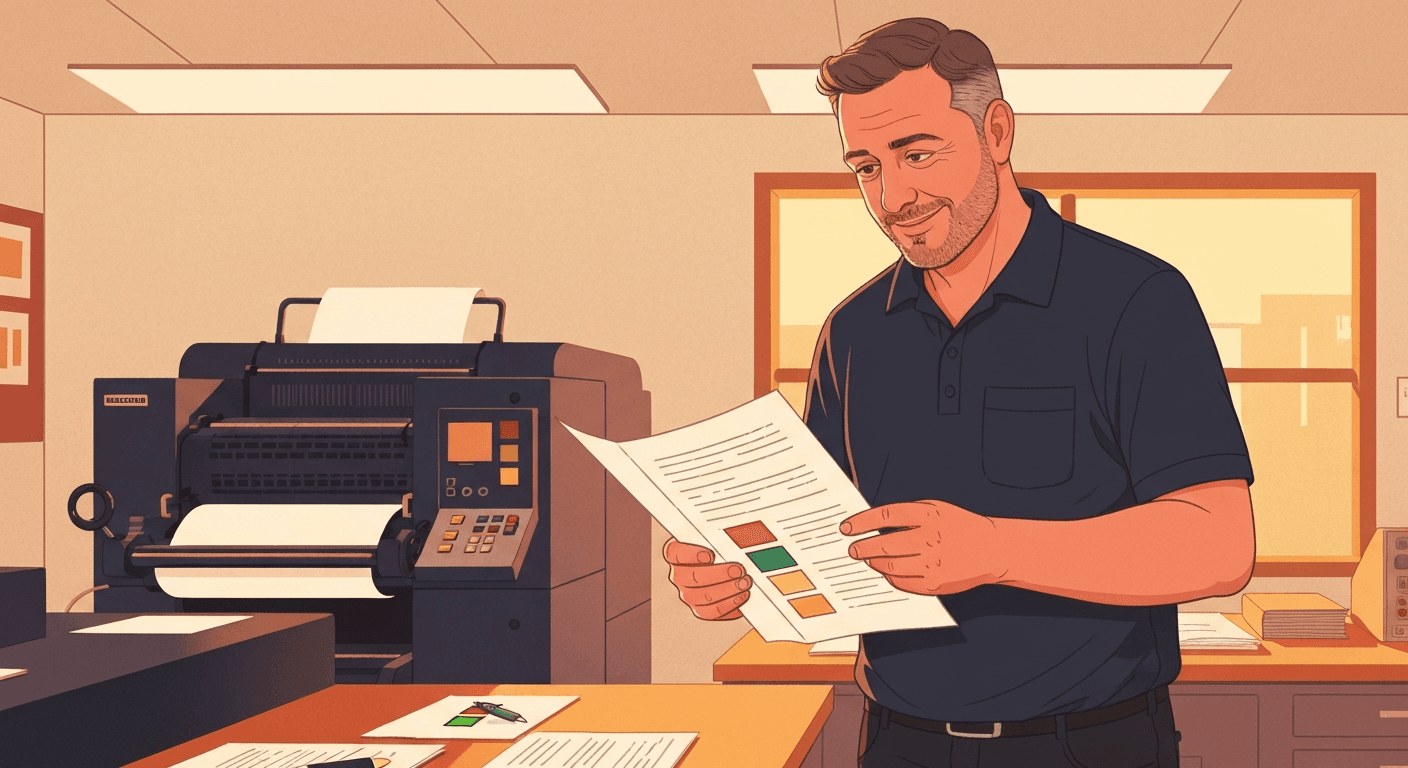
Marcus runs a 14-person commercial print shop in Coventry. His commercial combined policy renews next Tuesday. The premium has crept up from £4,200 to £5,100 over three years and his broker tells him "everything's gone up, mate, it's the market." Marcus signs the renewal because he always signs the renewal. Three weeks later a sprinkler head fails on a Saturday night and ruins £180,000 of paper stock, two Heidelberg presses and the back wall of the unit. His broker submits the claim and rings him on the Wednesday. The buildings sum insured was set in 2019 at £1.2M. The actual rebuild cost is £1.95M. Average clause kicks in. The £180,000 claim gets paid at 61.5%. Marcus is £69,300 out of pocket on a single line of the loss, before he even gets to the business interruption shortfall, which it turns out was capped at a 12-month indemnity period when the rebuild will take 16.
Marcus didn't need a quote engine. He didn't need a price comparison. He needed someone, anyone, to read his policy schedule and tell him what was about to go wrong. PolicyAudit is that someone. He uploads his three PDFs, answers ten questions, and seven minutes later he sees a one-page traffic-light report: red on buildings sum insured (54% short), red on BI indemnity period (12 months when his trade body's data says 18 to 24), amber on cyber sub-limit, green on PI. Each red comes with what an average clause would do to a £100k partial claim, the exact wording in his policy that triggers it, and a printable summary he can hand to his broker before the renewal call. He pays £79 once. The fix saves him five figures.
Scores
How does this idea stack up?
7.4/10
4.3M UK SMEs, 80 to 88% underinsured, ABI itself calling for an awareness campaign in 2026. Adjacent demand huge (1,900/mo for "business insurance UK", 590/mo for "commercial combined insurance").
Average clause routinely halves partial-loss payouts. 43% of SMEs hit by fire or flood need 12 to 24 months to recover, only 21% have 24 months of BI cover. The pain is real but mostly latent until a claim.
LLM document extraction on policy PDFs, BCIS Location Index for rebuild benchmarks, no FCA authorisation needed if the output is informational rather than advice. MVP in 3 to 4 weeks.
ABI's January 2026 report plus the call for a time-limited awareness campaign is the catalyst. Allianz, Aviva and Intact have all issued underinsurance commentary in Q1 2026. Window is 12 to 24 months before incumbents close it.
The awareness wave fades, but the underlying problem (people don't read policies, sums insured drift with inflation) is permanent. Risk is that incumbents bolt the audit into renewal flows and commoditise the wedge.
Solo-buildable. The harder work is getting the audit logic right per insurer wording and staying clearly on the introducer side of FCA rules.
Strongest
Timing
The ABI's January 2026 report is the loudest underinsurance moment in a decade and the trade press is amplifying it weekly.
Watch out
Durability
Incumbent insurers (Allianz Smart Broker Brief, Aviva sums-insured confirmation pages) are already bolting underinsurance flags into their own quote and renewal flows. The window is real but compressing.
Pain Point
The problem
“94% of commercial properties are insured for the wrong amount. If a property has a reinstatement value of £1.8 million but the actual rebuild cost is £2 million, under the average clause the insurer can reduce a £240,000 claim by 10%, leaving the business liable for the £24,000 difference.”
— Gallagher UK, "Underinsurance, The Hidden Risk"
The ABI's January 2026 "Small Business, Big Risk" report surveyed 1,000+ SME decision-makers and found that only half had reviewed their cover in the past 12 months. 48% of respondents had a physical premises but only 23% carried business interruption cover. 57% relied on portable electronic equipment but only 31% carried commercial contents. 57% used software or cloud services but only 29% carried cyber cover.
The mechanic that turns awareness gaps into financial pain is the average clause. It is in nearly every commercial property and contents policy in the UK. If your sum insured is half the rebuild cost, the insurer pays half the claim, even on a small partial loss. Most SMEs do not know this. Most have not had their sums insured recalculated since the policy was bought, while UK construction tender prices have risen 22% between 2019 and 2024 (BCIS).
Adjacent pain points compound the headline figure. BI indemnity period mismatch: 43% of SMEs hit by fire or flood need 12 to 24 months to recover, only 21% carry a 24-month period (Aon, 2024 data). A 12-month period that runs out at month 13 of a 16-month rebuild is not partial loss, it is total exposure. Cyber sub-limits: 77% of SMEs do not know what cyber covers (ABI 2026). Sub-limits on social engineering, ransomware and business interruption from a cyber event are routinely set 10x below actual exposure. PI definition drift: a retailer who has quietly become a wholesaler/logistics operation often finds the activity description on the policy schedule no longer matches what the business actually does. Insurers have refused claims on exactly this grounds (Livingstones Insurance, 2026 commentary).
Want reports like this every Thursday?
One validated UK business opportunity per week. Free.