Build BS 9792 fire risk assessments for UK HMO landlords
BS 9792 FRA + Residential PEEPs in an Evening
Executive Summary
In a nutshell
An AI-guided mobile fire risk assessment builder for UK HMO landlords, purpose-built for BS 9792:2025 (the new housing FRA standard, replaced PAS 79-2:2020 in August 2025) and the Fire Safety (Residential Evacuation Plans) Regulations 2025, which came into force on 6 April 2026. Walks the landlord through every fire door, escape route, and detector with their phone, captures photo evidence, builds the new mandatory Residential PEEPs, schedules recurring BS 5839 weekly tests / FD30 6-monthly inspections, and renders a council-ready PDF. The market is ~497,000 licensable HMOs, council enforcement is up 83% since 2018, and existing tools (AssessKit, FireRisk365, Letavo, FireAnthill) are all aimed at professional assessors, leaving the self-serve landlord segment wide open at exactly the moment two new regulations land on their doormat.
The Story
Meet the user
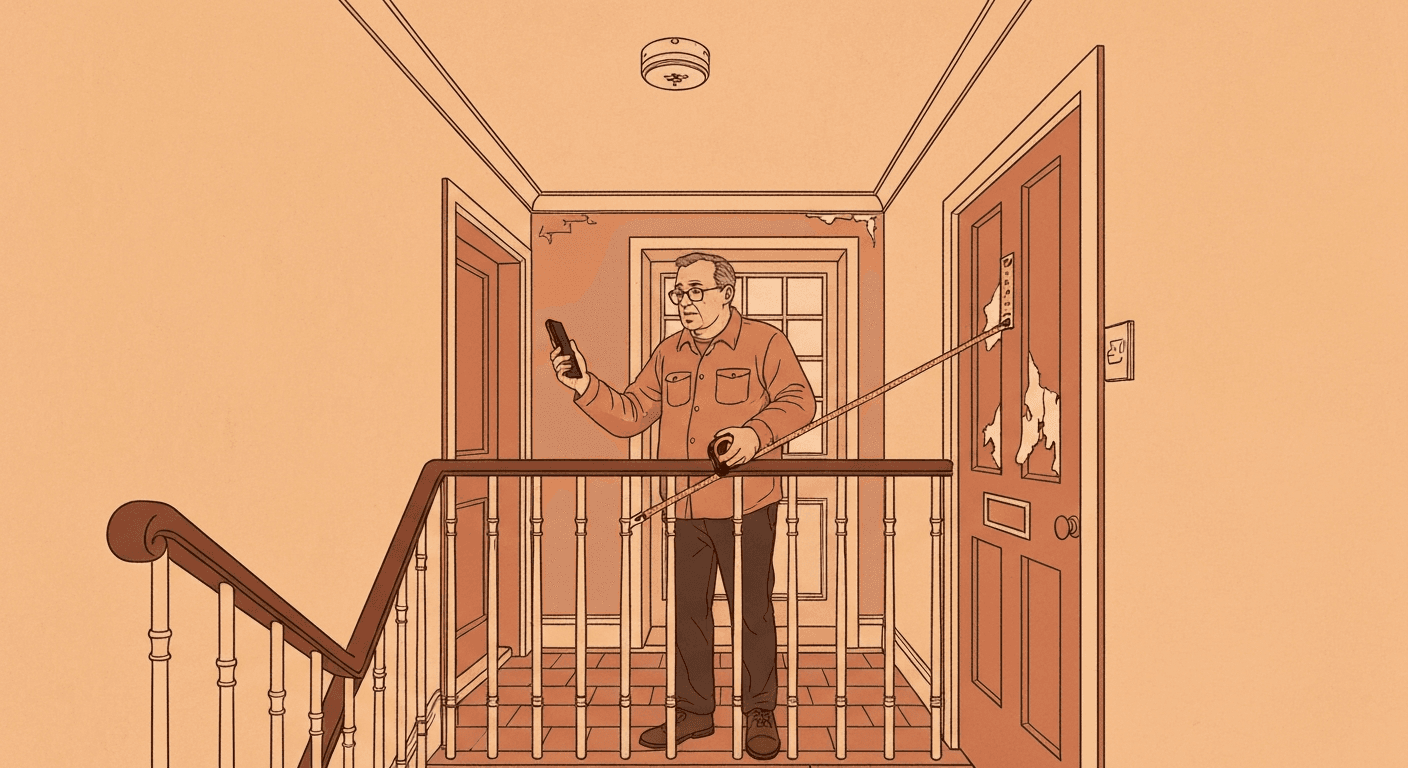
Greg owns four HMOs in Sheffield, two five-beds in Crookes, a six-bed near the university, and a four-bed in Hillsborough that he converted himself in 2019. Twenty-three rooms, twenty-three rent rolls, and as of 6 April 2026, twenty-three new compliance headaches. The selective licensing renewal letter arrived on Tuesday: alongside the usual gas and electrical certs, the council now wants a BS 9792:2025-compliant fire risk assessment for each property and a Residential PEEP for any tenant with a mobility, cognitive or sensory impairment, which on his books means three. He rang his usual fire risk assessor, who quoted £380 per HMO (so £1,520) plus £180 each for the PEEPs (£540) plus a six-week wait. Total damage: £2,060, mostly to satisfy a tick-box that he could probably do himself if anyone bothered to translate the 47-page BS 9792 standard into something a normal human could follow.
He spent Saturday morning trying. Downloaded the LFB template, fine for a pub, useless for an HMO. Tried AssessKit's free trial, built for professional assessors charging clients, not landlords assessing their own stock. Then a mate in his BTL WhatsApp group sent him a link: "This thing walks you through it on your phone, photographs every fire door, builds the PEEP from a 4-question script with the tenant, and spits out a PDF the council recognises. £19 a property, done in an evening." He paid for the whole portfolio, walked the four properties on Sunday, and on Monday morning the council inspector accepted the file without a quibble.
Scores
How does this idea stack up?
7.3/10
~497k licensable HMOs in England, fire risk assessment cluster 17k+ UK searches/month, CPCs £12-18 indicating strong commercial intent
£200-800 per assessment, council enforcement up 83% since 2018, £30k fines, prison risk, licence revocation, and now PEEPs added on top
Standard mobile + PDF + AI stack; complexity is in domain knowledge (BS 9792, BS 5839, FD30) and getting council acceptance, not in the build
PEEPs Regs came into force literally three weeks ago (6 April 2026); BS 9792:2025 replaced PAS 79-2:2020 in August 2025, both regulatory shocks are fresh
Compliance scramble peaks in 12-24 months but recurring weekly tests + 6-monthly door checks + annual PEEP reviews create steady-state recurring revenue
Domain knowledge required, legal liability is real, council-acceptance risk needs partnership signal, medium build, not a weekend project
Strongest
Timing
Two brand-new regulations (one three weeks old) creating an enforced compliance event for half a million properties.
Watch out
Durability
The initial wave is steeper than the steady-state. Build the recurring inspection layer (BS 5839 weekly tests, FD30 6-monthly) hard from day one or you become a one-shot tool.
Pain Point
The problem
“For a typical 5-bed HMO conversion, total fire safety costs are usually £3,000–£7,000... A professional independent assessment for an HMO typically costs £200 to £450 depending on complexity... Council inspections of HMOs have risen by 83% since 2018, while enforcement actions, including improvement notices and prosecutions, have jumped by 180%.”
— Combined sources: Clear Fire Compliance, LandlordZONE, HMO Mortgage Broker market report 2026
Fire risk assessment under the Regulatory Reform (Fire Safety) Order 2005, strict legal requirement, must be "suitable and sufficient", reviewed regularly. Article 9 makes it the single most important compliance document. Failure = unlimited fine, up to 2 years imprisonment, HMO licence revocation.
BS 9792:2025 (published August 2025, replaced PAS 79-2:2020), new housing-specific FRA standard with refreshed pro forma, mandatory Person-Centred Fire Risk Assessments (PCFRAs) for supported / extra care / sheltered, and clarified hazard-vs-risk distinction.
Fire Safety (Residential Evacuation Plans) (England) Regulations 2025, into force 6 April 2026. Residents with disabilities/impairments now entitled to a PCFRA, mitigation measures, written evacuation statement, and information shared with local Fire & Rescue Service.
BS 5839 weekly fire alarm tests and FD30 6-monthly fire door inspections, recurring, must be logged. Council selective-licensing audits demand the log.
Selective licensing rollout, councils enforcing harder, fines up to £30,000, ~57,725 annual HMO applications in 2025 (up 40% since 2018).
The actual professional assessor route costs £200-800 per property and takes 4-6 weeks. For a portfolio landlord with 4-10 properties, that's £1,000-£5,000 of professional fees to satisfy a paperwork exercise that, for a competent landlord with the right guided tool, could be done in an evening. AssessKit, FireRisk365, FireAnthill, Letavo all exist, but every one of them is built for the professional assessor billing a client, not the HMO landlord doing their own.
Want reports like this every Thursday?
One validated UK business opportunity per week. Free.