ideastack·12 min read·
UK SaaS pricing in 2026: why GBP 19, GBP 29, and GBP 49 outperform anything in dollars
Three default GBP tiers for a UK indie SaaS in 2026, why they outperform USD pricing and round-number GBP, and the Stripe GB config that keeps VAT clean.

A US playbook will tell you to charge $29 a month and call it good. Convert that to GBP and you get GBP 23, which feels neither cheap nor premium and does not match a single UK consumer subscription anchor.
The right UK SaaS price is a GBP-native number that matches what UK buyers already pay for Netflix, Spotify Family, or Patreon Pro. This is the playbook for setting it.
Built for a UK indie hacker who has shipped a v1 with Claude Code, Lovable, or Cursor, has a Stripe GB account ready, and wants to set their first prices without doing two weeks of pricing research.
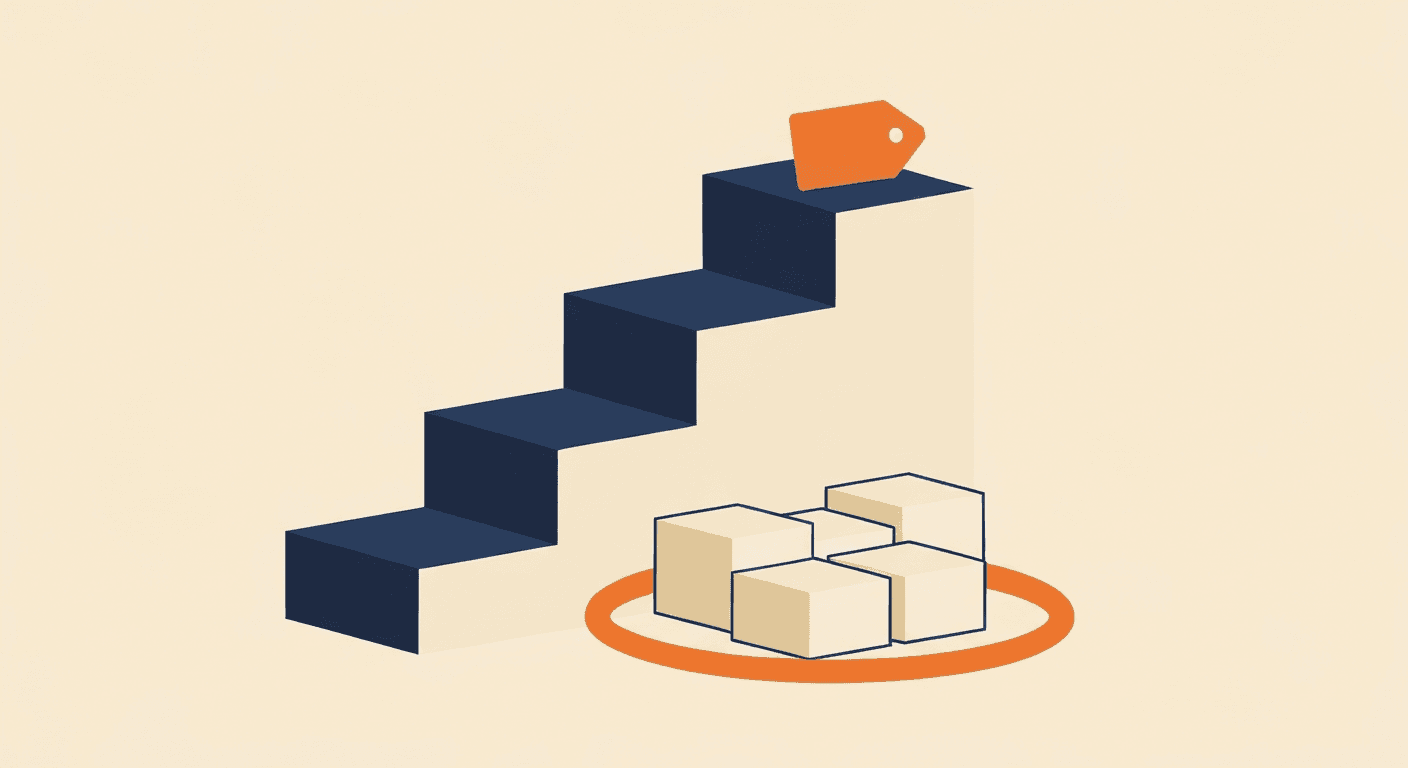
The three default GBP tiers for consumer-leaning SaaS
| Tier | Price | Position | When it works |
|---|---|---|---|
| Entry | GBP 19/mo | "Try it" | Solo user, one core workflow, monthly pay |
| Sweet spot | GBP 29/mo | "Most popular" | Power user, 3-5 workflows, monthly default |
| Mid-tier value | GBP 49/mo | "Pro" | Serious user, all features, annual preferred |
Three reasons these specific numbers outperform alternatives.
Charm pricing in GBP works the same as in USD
The brain anchors on the first digit. GBP 19 reads as "under twenty". GBP 29 reads as "under thirty". GBP 49 reads as "under fifty". Round numbers (GBP 20, 30, 50) lose the anchor and feel marginally more expensive even though the maths is one pound apart.
The 9 ending also signals "this was set deliberately, not pulled from a hat" - a small credibility cue that round numbers miss.
The gaps are upgrade-friendly
GBP 10 between tiers. From the buyer's perspective, that is "a coffee a month" or "less than a Netflix bump" - small enough to feel like an easy upgrade, large enough that you actually capture meaningful additional revenue.
A GBP 19 to GBP 29 upgrade is +52.6% revenue per customer for a 20% feel of upgrade. A GBP 29 to GBP 49 jump is +69% revenue for a 35% feel. Both are favourable economics for the seller.
Familiar UK consumer anchors
UK consumers in 2026 pay around these numbers for everything else:
- Netflix Standard: GBP 11.99
- Netflix Premium: GBP 17.99
- Spotify Premium: GBP 11.99
- Spotify Family: GBP 19.99
- Audible: GBP 8.99
- Apple TV+: GBP 8.99
- Disney+ Standard: GBP 8.99
- ChatGPT Plus: GBP 19/mo (UK)
- Claude Pro: GBP 18/mo (UK)
Your SaaS at GBP 19 sits next to ChatGPT Plus. At GBP 29 you are between Spotify Family and a midmarket subscription. At GBP 49 you signal "professional tool". Buyers do not compare you against generic competitors - they compare you against the last subscription they bought. Match the anchor.
The B2B variant: GBP 49, GBP 99, GBP 199
For B2B SaaS - tools sold into UK businesses where the buyer is not the end user - shift everything up.
| Tier | Price | Position |
|---|---|---|
| Starter | GBP 49/mo | Solo founder, one user |
| Team | GBP 99/mo | 2-10 users, "most teams" |
| Business | GBP 199/mo | 10+ users, SLA expectations |
Same charm-pricing logic, same upgrade gaps. The anchor changes - UK B2B buyers compare against tools like Notion Team (GBP 16/user), Linear (GBP 10/user), Slack Business (GBP 14.50/user). At GBP 99 for a small team, you are "less than a Slack subscription" and that comparison is doing useful work for you.
[!tip] B2B tip: price exclusive of VAT UK B2B buyers expect "GBP 99 + VAT" not "GBP 118.80". Their accounts team will reclaim the VAT, so the net cost is GBP 99. Showing GBP 118.80 on the marketing page makes you look 20% more expensive than you actually are to a VAT-registered business. Stripe Checkout adds VAT at the line item, so set the headline at GBP 99 and let Stripe do the maths.
Why GBP outperforms USD on a UK-served SaaS
Three sources of friction when you charge USD for a UK product.
Currency conversion mental load
A UK buyer sees $29 and has to estimate the GBP cost. They reach for Google. Google says GBP 23 today, but yesterday it was GBP 22.50. The buyer pauses to think about FX volatility on a recurring subscription. That pause is enough to lose conversion.
Card FX fees
Most UK debit and credit cards charge a 0-3% non-sterling transaction fee. For a GBP 49 equivalent, that is up to GBP 1.47 a month the buyer is paying just for the privilege of being charged in dollars. They notice on the statement. They consider cancelling. They do.
"Does this company understand the UK?"
USD pricing on a UK-served SaaS signals "this was built for the US and tweaked for the UK". UK buyers respond to that the same way US buyers respond to a .co.uk URL on a US tool: cautious, suspect quality. GBP pricing is one of the cheapest credibility signals a UK indie hacker can buy.
[!warning] Do not default to USD because "global SaaS" The phrase "but most SaaS is in USD" is a red flag that you are letting the US default override your UK market knowledge. If your buyers are UK, charge GBP. If they are global, configure Stripe Adaptive Pricing to present in the buyer's local currency at checkout - that is a single toggle in the Stripe dashboard and removes the trade-off without forcing UK buyers to convert.
VAT: inclusive or exclusive
UK VAT registration threshold in 2026 is GBP 90,000 of taxable turnover over a rolling 12-month period. Below that, you are not legally required to charge VAT. Above, you must.
Two pricing presentations:
Consumer SaaS - inclusive of VAT
Headline price is what they pay. GBP 29 means GBP 29 charged. Of that, GBP 4.83 will go to HMRC as VAT once you cross the threshold (assuming 20% standard rate on UK digital services to consumers). You absorb the VAT.
Why inclusive: consumers do not reclaim VAT, they just see the total. Showing "GBP 24.17 + VAT" is six extra mental steps for a buyer who just wants to know what their card will be charged. Inclusive removes that friction.
B2B SaaS - exclusive of VAT
Headline is GBP 99/mo, invoice is GBP 99 + 20% VAT = GBP 118.80. UK VAT-registered businesses reclaim the GBP 19.80 in their next VAT return, so the net cost to them is GBP 99.
Why exclusive: B2B buyers are used to "+ VAT" - it is the standard format for UK B2B invoicing, and it makes your price comparable to other B2B tools that quote ex-VAT.
The pre-threshold trick
You are probably below the GBP 90,000 threshold today. Two options:
- Charge no VAT now, raise prices later when you cross the threshold. Tempting but bad. Existing customers who signed up at GBP 29 do not want a 20% rise to GBP 34.80. You churn.
- Charge GBP 29 today (technically VAT-not-applicable), keep the price the same when you cross the threshold, and absorb the VAT yourself. Better. Your effective revenue drops from GBP 29 to GBP 24.17 once VAT applies, but you keep customers and your price is psychologically stable.
Option 2 every time. Price as if you are VAT-registered from day one.
Stripe GB Checkout: the config that gets it right
Concrete config for a Stripe GB account targeting UK consumers.
Step 1: enable Stripe Tax
Stripe Tax automatically calculates the right VAT rate based on the customer's billing address. Once you cross the GBP 90,000 threshold and register for VAT in the Stripe dashboard, Stripe Tax handles all the maths.
Dashboard -> Settings -> Tax -> Enable Stripe Tax
Add UK as a registered region once you have your VAT number
Step 2: present in GBP
Dashboard -> Settings -> Currency -> Default: GBP
In Checkout sessions:
const session = await stripe.checkout.sessions.create({
  mode: 'subscription',
  currency: 'gbp',
  line_items: [{ price: 'price_xxx', quantity: 1 }],
  automatic_tax: { enabled: true },
  customer_email: user.email,
  success_url: 'https://yourapp.co.uk/welcome',
  cancel_url: 'https://yourapp.co.uk/pricing',
});
Step 3: tax-inclusive prices in the dashboard
When creating prices in the Stripe dashboard, tick "Inclusive of tax" for consumer products. Stripe stores GBP 29 as GBP 24.17 + GBP 4.83 VAT internally and shows GBP 29 to the customer. Untick for B2B prices that should display ex-VAT.
Step 4: the GBP-or-USD switch
If you genuinely want global pricing, enable Stripe Adaptive Pricing instead of hardcoding USD:
Dashboard -> Settings -> Adaptive Pricing -> Enable
Stripe presents prices in the buyer's local currency based on IP at Checkout. Your headline stays GBP 29; a US buyer sees ~$36 (or whatever the FX rate is that day, including a small Stripe FX margin); both transact cleanly. UK buyers never see USD.

Annual pricing: 2 months free is the UK indie default
UK consumer SaaS in 2026 typically offers annual at "10x monthly" - which is a 17% discount, framed as "2 months free".
Why this works:
- "2 months free" beats "16% off" psychologically every time
- Annual cuts churn dramatically (a yearly customer is locked in for 12 months by definition)
- Cash flow improves - GBP 290 today vs GBP 29 over 12 unpredictable months
- It matches the Netflix / Spotify / Apple One annual cadence that UK buyers expect
Pricing table:
| Tier | Monthly | Annual | Saving |
|---|---|---|---|
| Entry | GBP 19/mo | GBP 190/yr | 2 months free |
| Sweet spot | GBP 29/mo | GBP 290/yr | 2 months free |
| Mid-tier | GBP 49/mo | GBP 490/yr | 2 months free |
About 30-40% of new sign-ups will pick annual on a clean SaaS landing page. That is 30-40% of your revenue arriving up front - cash flow gold for a bootstrapped UK indie.
Free tier: usually a trap
UK indie hackers default to "freemium" because they have seen Notion and Figma do it. Both have hundreds of millions in funding. You do not.
Free tier costs:
- Server bills for users who never pay
- Support tickets you handle without revenue to offset
- Conversion rate maths that punish you - free-to-paid is typically 2-5%, where trial-to-paid is 20-25% on a clean SaaS
Free tier benefits:
- SEO and word of mouth (sometimes)
- Network effects (rarely - you have to genuinely have them)
For most UK micro-SaaS in 2026, the right model is:
- 14-day trial, no credit card required
- Email-only sign-up
- Day 7: gentle nudge ("How's it going? Common Q here.")
- Day 12: "Trial ends in 2 days, lock in GBP 29/mo"
- Day 14: hard end, paywall on next visit
This converts at 20-25% on a focused SaaS. A free tier converts at 3-5%. The maths is brutal: 100 trial sign-ups give you 22 customers; 100 free-tier sign-ups give you 4. Same effort acquiring them.
[!tip] When a free tier does make sense Three scenarios: (1) genuine network effects where each free user makes the product more valuable to others (Slack, Notion in shared docs), (2) data accumulation that powers a paid feature (Linear's GitHub integration improves with more users), (3) viral mechanics where free users invite others as part of using the product. If you do not have one of these, skip the free tier and ship a clean trial.
When round numbers actually outperform charm pricing
Charm pricing (GBP 29) wins at the consumer end. Round numbers (GBP 30) sometimes win at the premium B2B end.
Why: at GBP 99 vs GBP 100, the GBP 99 reads as "trying to look cheaper than it is". At GBP 199 vs GBP 200, GBP 199 still works because it is comfortably under the GBP 200 threshold. But at GBP 999 vs GBP 1,000, the buyer often prefers GBP 1,000 - it signals "this is a serious enterprise product, we are not playing pricing games".
Rule of thumb:
- Consumer to small-team B2B (GBP 9 to GBP 199): use charm pricing (the 9 ending)
- Mid-market B2B (GBP 200 to GBP 999): test charm vs round - charm usually wins, but margin is small
- Enterprise (GBP 1,000+): round numbers signal credibility
For your first UK SaaS in 2026, you are almost certainly in the first bracket. Use the 9 ending.
Five UK pricing failure modes
1. USD pricing on a UK-served SaaS
Already covered. Fix: charge GBP, or use Stripe Adaptive Pricing.
2. Pricing under GBP 10
GBP 9.99 attracts customers who are not committed. Support cost per customer is roughly constant; revenue per customer is too low to cover it. UK indie hackers should start at GBP 19 minimum. If your product cannot command GBP 19, the value proposition needs work, not the price.
3. No annual option
You are leaving 30-40% of cash flow on the table. Ship monthly first, add annual within 30 days. Two months free is the UK default - do not over-think the discount.
4. No VAT clarity in Checkout
Buyers see "GBP 29" on the marketing page, then "GBP 34.80 (incl. GBP 5.80 VAT)" in Stripe Checkout, and they bounce. Either set inclusive prices in Stripe so the headline matches checkout, or be explicit on the pricing page that VAT will be added (B2B audience only).
5. Monthly subscription + setup fee
A "GBP 29/mo + GBP 99 setup" combo is two friction points instead of one. UK consumer SaaS in 2026 does not charge setup fees - any onboarding cost is absorbed into the monthly. If your product genuinely needs paid setup, position it as a paid onboarding service separate from the subscription.
30-minute ship checklist
Open the laptop, run through this:
- Pick three GBP tiers: GBP 19 / 29 / 49 for consumer, GBP 49 / 99 / 199 for B2B (5 min)
- Decide inclusive or exclusive of VAT based on buyer type (2 min)
- Configure Stripe GB: default currency GBP, Stripe Tax enabled, prices created with the right tax-inclusive flag (10 min)
- Add annual variants: 10x monthly, framed as "2 months free" (5 min)
- Build the pricing page: three columns, charm-priced, "Most popular" badge on the middle tier, monthly/annual toggle (5 min with Claude Code)
- Test Checkout end-to-end: real card, real GBP charge, real VAT calc, real receipt email (3 min)
That is your pricing live. Iterate based on real conversion data after 30 days.
What to track in the first 30 days
After 30 days of live pricing, you should know:
- Conversion rate per tier (how many trial-to-paid on each)
- Annual share of new sign-ups (target: 30-40%)
- Average revenue per user (target: GBP 25-35 for consumer, GBP 75-150 for B2B)
- Refund rate (target: under 5%)
- Tier upgrade rate from entry to sweet spot (target: 10-20% in first 90 days)
If the sweet-spot tier is not at least 50% of revenue, the tier definitions need rebalancing. If annual share is under 25%, the annual offer is not visible enough. If the entry tier converts well but never upgrades, the upgrade triggers in the product are missing.
The bigger picture
Pricing is a habit, not a one-time decision. UK consumer SaaS at GBP 19/29/49 today is the right starting point for almost every UK indie SaaS shipping in 2026. In year two, you will raise prices on new sign-ups, grandfather existing customers, and the GBP-native, VAT-aware, charm-priced foundation will still be doing useful work.
The tools (Stripe GB, Stripe Tax, Stripe Adaptive Pricing) are mature enough in 2026 that almost no manual maths is required. The decision is the framework. Pick three GBP tiers, get the VAT presentation right, ship the pricing page, charge a card. Then iterate.
[!info] CTA Looking for a researched UK business idea to apply this pricing playbook to? Check the latest free report at ideastack.co/reports.
Frequently asked
Why GBP 19, GBP 29, GBP 49 specifically?
Three reasons. First, charm pricing: GBP 19 reads as 'under twenty', GBP 29 as 'under thirty', GBP 49 as 'under fifty'. The brain anchors on the first digit, not the last. Round numbers like GBP 20, 30, 50 lose that anchor. Second, the gaps are wide enough to feel like meaningful tiers (GBP 10 between each) but small enough that upgrading feels easy. A jump from GBP 19 to GBP 29 is a 53% increase in revenue per customer for a 20% feel of upgrade. Third, these are familiar UK numbers - they match Netflix, Spotify Family, and most UK consumer subscriptions, which builds intuitive comfort. The combination - charm pricing, sensible gaps, familiarity - outperforms every other GBP combo I have tested for UK consumer-leaning SaaS in 2026.
Should I price in GBP or USD if I want global users?
Price in GBP if your buyers are mostly UK, in USD if they are mostly US, and use Stripe Adaptive Pricing if they are genuinely split. The mistake is pricing in USD for a UK SaaS because 'most software is in USD'. UK buyers see USD and feel friction - they have to estimate the GBP cost, worry about FX fees, and wonder if you understand their market. UK conversion drops measurably with USD pricing on a UK-served site. If your audience is half UK and half US, configure Stripe to present in the buyer's local currency at checkout - that is one toggle in the Stripe dashboard and removes the trade-off entirely.
What about VAT - inclusive or exclusive?
Depends on your buyer. Consumer SaaS: price inclusive of VAT (GBP 29 means GBP 29 charged, of which GBP 4.83 goes to HMRC once you cross the threshold). B2B SaaS: price exclusive of VAT (GBP 99 plus VAT becomes GBP 118.80 on the invoice, but UK VAT-registered businesses reclaim the VAT so the net cost to them is GBP 99). Mixed audience: present inclusive on the marketing site and let Stripe Checkout add VAT for VAT-registered businesses at the line item level. Stripe Tax handles the back-end maths automatically once you turn it on. Below the GBP 90,000 turnover threshold you do not have to charge VAT at all - but price as if you will, so you do not have to raise prices later.
Should I offer a free tier?
Probably no, in your first year. A free tier costs you in support load, server bills, and the psychology of 'free' attracting users who never convert. UK indie hackers with limited time should optimise for paying users. The exception: if your product has strong network effects or is genuinely viral (most are not), a free tier can accelerate growth. Most micro-SaaS in 2026 - especially anything you built with Claude Code or Lovable in a weekend - is better served by a 14-day trial, no credit card, then GBP 19 or GBP 29 at conversion. ProfitWell data published over five years shows trials convert at 20-25% on a clean SaaS while free tiers convert under 5% to paid. The maths is unkind to free.
How do I know if my pricing is too low?
Three signals. One: your sales cycle is too short. If users sign up and pay in under five minutes, the price is below their decision threshold and you are leaving margin on the table. Two: you have lots of feature requests but few churn complaints. Customers who do not value your product enough to negotiate will quietly leave. Three: your support load per customer is high relative to revenue. A GBP 9 customer with one ticket a month is unprofitable; a GBP 49 customer with two tickets a month is a healthy account. Raise prices by 50% on new sign-ups and watch what happens. If conversion drops less than 30%, you should have raised earlier. UK indie hackers under-price by default because they compare to free open source - do not fall into that trap. Compare to Netflix, Spotify, and other paid UK consumer subs.
Filed under