ideastack·6 min read·
How to turn a side project into a real business (UK guide)
The practical UK playbook for turning a weekend AI-built side project into a real business. When to incorporate, how to register for VAT, and the five mistakes that sink most indie UK ventures.
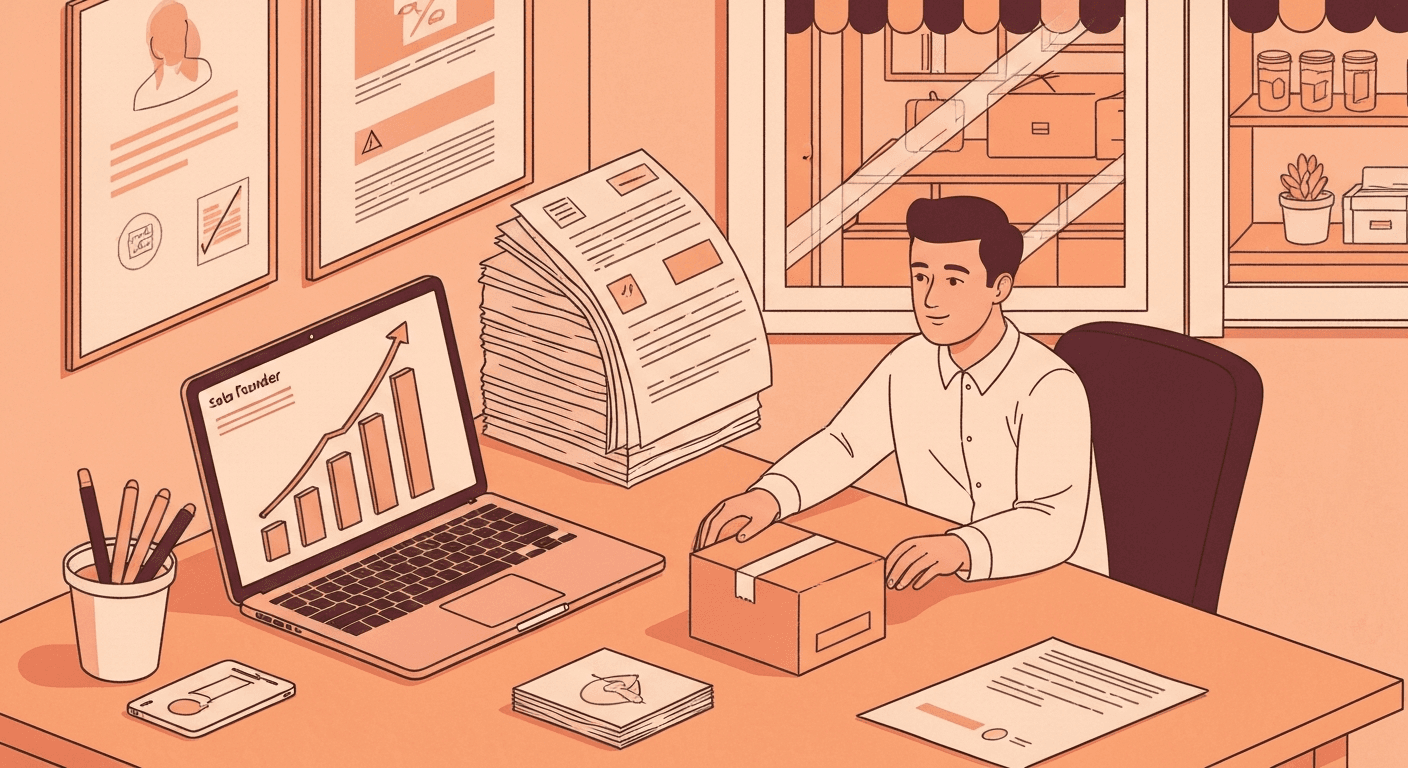
The best UK indie businesses of the next three years will start as weekend builds. That is the good news. The less-fun news is that the step from "working app" to "real business" is full of paperwork, sharp edges and surprise tax bills that no one teaches you in school.
This guide is the condensed version. When to incorporate. How VAT works. How to pay yourself. And the five mistakes that take down most UK side projects the moment they start making real money.
When is a side project a business?
There is no legal definition in the UK. But there is a useful practical one: a side project becomes a business the moment a real user would be annoyed if you shut it down.
Before that point, you are experimenting. After it, you have obligations — to users, to HMRC, to your own future self.
Most indie products cross that line at around three months of consistent revenue. It creeps up on you. One month you have five people paying £9/month, the next you have fifty.
Phase 1: Sole trader (zero to £1,000 MRR)
Start as a sole trader. It is the simplest, cheapest legal form in the UK and perfect for testing whether an idea has legs.
What you need to do:
- Register for Self Assessment with HMRC (free, takes 10 minutes online)
- Keep records of income and expenses (a Google Sheet is fine at this stage)
- File a Self Assessment tax return between April and January each year
That's it. No incorporation, no Companies House filings, no corporation tax.
Tax at this stage:
You pay Income Tax and Class 2/Class 4 National Insurance on your profit. In 2026/27 the personal allowance is £12,570, so the first £12,570 of total income (including your day job) is tax-free. Above that you pay 20%, 40% or 45% depending on your total earnings.
Open a separate bank account on day one, even as a sole trader. It is not legally required but it saves you about four hours at tax time and makes Stripe and Plaid integrations cleaner. Starling Business and Tide both have genuinely free tiers and open in 20 minutes from your phone.
Phase 2: Incorporate as a Ltd company (£1,000+ MRR)
When your side project starts consistently generating revenue — usually around £1,000/month MRR or when you take on your first contractor — incorporation is worth it.
Why incorporate:
- Limited liability. Your personal assets are separate from the business.
- Tax efficiency. You can take a small salary plus dividends, which is more efficient at higher incomes.
- Credibility. Some B2B customers will not buy from a sole trader.
- Fundraising. You need a Ltd company to raise SEIS/EIS investment.
What it costs:
- Companies House registration: £50 online, same day
- Confirmation Statement: £34/year
- Annual accounts: £0 to file yourself, around £400-900/year with an accountant
- Corporation Tax return: included in accountant fees
You pay Corporation Tax on profits at 19% (small profits rate, under £50k) or 25% (above £250k, with marginal relief in between).
What you still do personally:
Self Assessment for any dividends and your salary above the personal allowance. Incorporation does not eliminate your personal tax return — it adds a corporate one on top.
Phase 3: VAT registration (when revenue hits £90k)
VAT is where most UK indie founders get tripped up. The rules:
- Mandatory registration at £90,000 rolling 12-month revenue (2026/27 threshold)
- 20% standard rate on most UK B2C sales
- You charge VAT on top of your price and hand it to HMRC
- You can reclaim VAT on most business expenses
The trap:
If your customers are UK consumers paying with a credit card, VAT registration effectively makes your product 20% more expensive overnight. You either absorb the hit (reducing margin) or raise your price (reducing volume). There is no third option that does not lose you money.
The opportunity:
If your customers are VAT-registered businesses, VAT registration costs you nothing — they can reclaim the VAT you charge. You can then reclaim VAT on your expenses (hosting, software, contractors), making you materially cheaper to run.
Practical rule:
- B2B SaaS with business customers: register voluntarily as soon as it saves meaningful money
- B2C product: delay until you absolutely must at £90k

Phase 4: Financial housekeeping
Once you are generating real revenue, a few systems move from optional to essential.
Business bank account
Starling Business or Tide, both free and British. Tide has better invoicing built in. Starling has better app reliability. Either works.
Accounting software
FreeAgent is the best default for UK indie founders. £19/month, handles Self Assessment, VAT returns, invoices and bookkeeping. NatWest gives it free if you bank with them. Xero and QuickBooks are alternatives but usually overkill at small scale.
Accountant
Optional at sole trader stage, near-essential once Ltd. Budget £400-900/year. The cheapest way to find one: ask in r/UKPersonalFinance or on Reddit r/smallbusinessuk for recommendations in your region.
Five mistakes that kill UK indie projects
These are the ones we see repeatedly.
1. Using your personal account for business
It feels efficient. It is not. HMRC will ask you to separate personal and business transactions at some point, and retrofitting that is miserable. Open a business account on week one.
2. Ignoring tax until January
Self Assessment is due 31 January for the previous tax year (ending 5 April). Founders who do not put money aside for tax get genuine, painful surprises. Rule of thumb: move 25-30% of every payment to a separate "tax pot" as soon as it arrives. Your future self will not curse you.
3. Not keeping receipts
HMRC expects you to keep records for five years after the relevant tax year. Photograph every receipt the moment you get it. FreeAgent has a receipt-capture app that syncs straight to your accounts.
4. Underpricing because it is a side project
A common belief is that a side project should charge less than a real product. It should not. Your costs (hosting, tools, time) are the same. Price for the value, not for your comfort level. Your first ten paying customers will tell you if the price is wrong — trust them, not your imposter syndrome.
5. Staying a side project forever
This one is emotional. At a certain point — usually when revenue hits £2-3k/month — you have to decide whether to go full-time, hire a contractor, or stay small. Drifting past that decision for months is the single biggest waste of momentum we see.
The transition checklist
When your side project crosses the line into a business, work through this list in order. Most of it is one weekend.
- Separate bank account
- Register as a sole trader with HMRC
- Set up accounting software
- Set up tax pot (30% of revenue in a separate savings account)
- Invoice properly (professional layout, UTR, VAT number if registered)
- Write a one-page business plan — 2026 targets, pricing, monthly goals
- Incorporate at the £1,000 MRR milestone (or sooner if you are fundraising)
- Hire an accountant
- Register for VAT when you are a year away from the £90k threshold
- Schedule quarterly reviews of your monthly management numbers
Where to go from here
The difference between a side project that stays a hobby and one that becomes a real business is almost never the code. It is whether you treat it like a real business early enough — separate accounts, tax discipline, monthly numbers, clear pricing, honest review of whether it is working.
If you are looking for your next validated UK business idea — with keyword data, competitor analysis, scoring and step-by-step builder prompts — the weekly IdeaStack report is free.
Get the weekly IdeaStack report — every Thursday we publish one deeply researched UK business opportunity with real keyword data, competitor analysis, SERP landscape, scoring frameworks and copy-paste builder prompts. Read the latest free report.
Frequently asked
At what point should I register a Ltd company for my side project?
When you are consistently invoicing or charging customers, or you are about to raise a pre-seed round. Before that, sole trader is fine and simpler. Most UK indie builders incorporate around £1,000 MRR or when taking on their first contractor.
Do I need to register for VAT from day one?
No. VAT registration is mandatory only once your 12-month rolling revenue exceeds £90,000. Register voluntarily earlier if your customers are also VAT-registered (you can reclaim input VAT). Never register voluntarily if your customers are consumers — it just adds 20% to your price.
Can I run a side business while employed full-time in the UK?
Yes, in almost all cases. Check your employment contract for a 'no competing business' clause. Your employer does not need to know as long as the side project is not competing with them and does not use company time or resources. You still pay tax on the income via Self Assessment.
What is the cheapest way to invoice UK customers from a side project?
Stripe Invoicing (free, takes a 2.9% cut on card payments) or FreeAgent (around 19 pounds per month, handles VAT and Self Assessment filing). Most indie builders start with Stripe and move to FreeAgent when bookkeeping gets annoying.
When do I stop being a side project and start being a real business?
The clearest signal is when you have three months of consistent revenue and a user base that would be annoyed if you shut it down. That usually happens around month four to six for serious indie projects. The legal bits can be sorted in a weekend once you are there.