ideastack·9 min read·
Saying no to your biggest customer: the bespoke-feature trap
A big customer wanting a bespoke feature is the most flattering trap at this stage. One custom build forks your product and turns you into their dev shop. How to say no to the feature while keeping the customer.
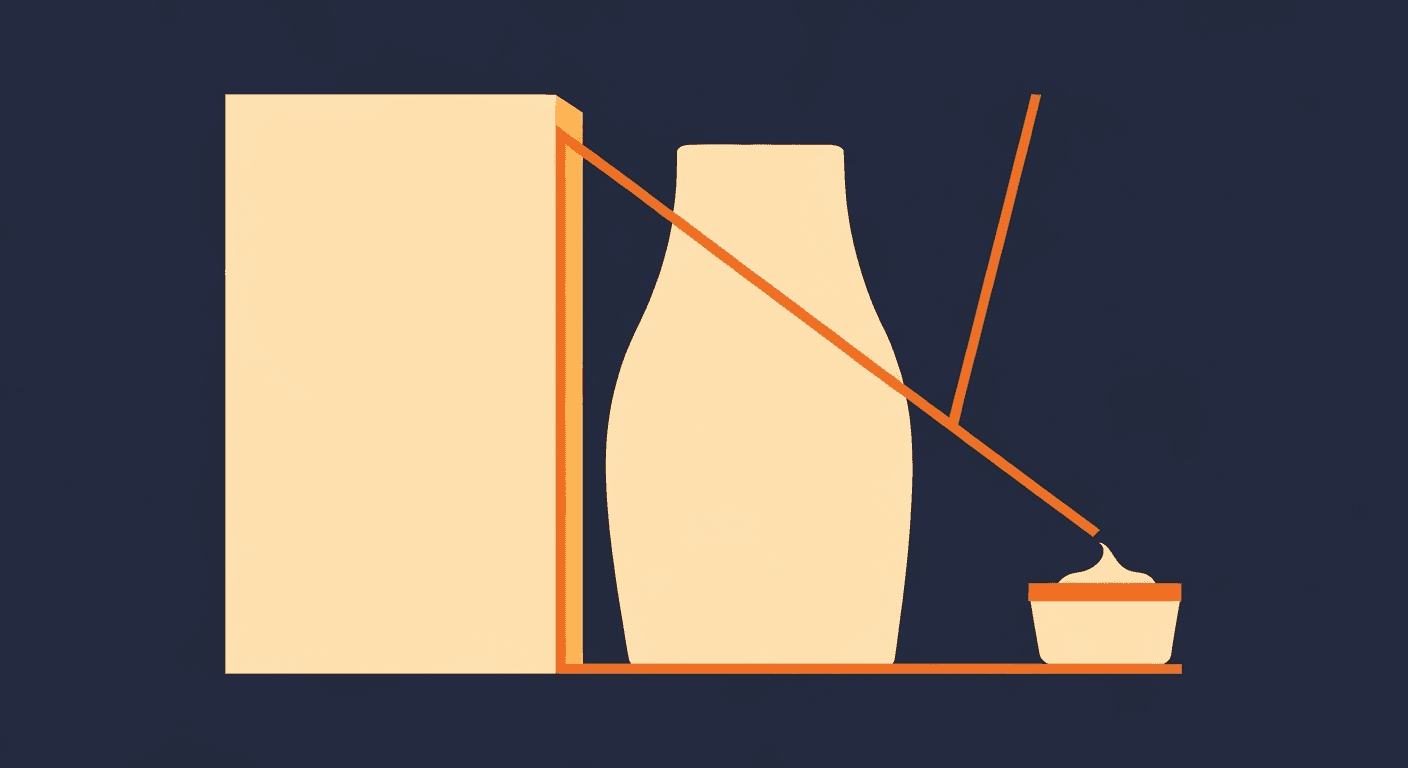
The email arrives and it makes your week. Your biggest customer, or a prospect bigger than anyone you have landed yet, loves the product. There is just one thing. They need a particular feature, built their particular way, and once it exists they are ready to commit, maybe upgrade, maybe sign for a year. The feature is very specific to how they work. But look at the size of them. Look at the logo. This is the deal the whole stage has been building towards.
It is also the most flattering trap you will meet as a solo founder, and a lot of promising one-person products quietly break themselves on exactly this moment. Not on a competitor, not on churn, but on a single yes to a single big customer that seemed obviously worth it at the time.
You do not have to lose the deal to avoid the trap. But you do have to see it clearly, because the instinct to say yes here is strong, immediate, and pointed in the wrong direction.
Why the temptation is so strong, and so dangerous
Everything about the request pushes you toward yes. The revenue is real and often larger than your usual ticket. The logo is validation you can point to. There is a live human on the other end saying they will pay if you build this, which is the rarest and most seductive signal in early SaaS, because so much of your work up to now has been guessing what people want. Here is someone telling you exactly what they want and attaching money to it.
And yet. Everything that makes the request tempting is about the short term, and almost every cost lands in the long term, on you, alone. Sales advice and startup lore both reward closing the deal in front of you. Nobody sends you a bill for the maintenance drag two years from now, or the fifteen releases where you had to remember not to break the one customer's special path. The incentives are lopsided: the upside is immediate and visible, the downside is deferred and diffuse. That asymmetry is exactly what makes it a trap rather than a simple decision.
What one bespoke build actually does
Strip away the flattery and look at what you are being asked to add: a feature that, by definition, serves one customer. Hold that against everything you know about dead features, because a bespoke build is a dead feature you are choosing to create on purpose.
It ships with a single user, which means it fails the usage test the moment it goes live. Nobody else will touch it, because it was shaped around one company's specific workflow. From that day forward, every change you make to the product has two masters: the general case that serves everyone, and the special case that must not break for the one customer paying for it. Your codebase has forked, not into two repositories, but into two conflicting sets of requirements living in the same files, and you are the only person holding both in your head.
That is the moment you stop being a product company and start being that customer's development shop. Your roadmap now has a permanent tenant you did not invite. And unlike a real agency, you cannot even make the economics work, because at 3 to 30 customers you cannot amortise the cost of that maintenance across anyone else. There is no one else. It is one build, one payer, and a tax that grows with every future release, forever.
The logo felt like it made your product more serious. The fork quietly made it more fragile.
The enterprise rule does not apply to you
Search this problem and you will find a reasonable-sounding consensus, usually some version of the advice given to funded startups: say yes to a custom feature if the deal is big enough, if the feature is on your roadmap for the next 24 to 30 months anyway, and if your gut says it is genuinely good. Prioritise it, charge for it, ship it early.
That is sound advice, for the company it is written for. It assumes a sales team compensated on closed deals, a product manager weighing the request against a real backlog, and above all a 24-month roadmap and a team to amortise a custom build across dozens of future customers. Every one of those assumptions is false for you.
You have no team to absorb the maintenance. You have no 24-month roadmap, because at your stage a roadmap that long is fiction. And you cannot spread the cost across future customers, because you do not yet know who those customers are or whether they will want the same thing. The enterprise rule quietly relies on scale to make the maths work. Take the same rule down to one person and 3 to 30 customers and the maths stops working, because there is nothing to spread the cost over except you.
So your version of the rule has to be stricter. Not never, but a much narrower yes than the funded playbook allows.
Say no to the feature, yes to the customer
Here is the reframe that gets you out clean. The request bundles two things together, and your job is to pull them apart. There is the specific bespoke feature, which you almost certainly should not build. And there is the customer relationship, which you almost certainly should keep. Saying no to the first does not require saying no to the second. In fact, done well, a clear no can deepen the relationship rather than end it.
You have three honest ways to respond, and the right one depends on what the request really is underneath.
Find the general version. Before you refuse anything, ask whether there is a version of this ask that several of your customers would use, not just this one. Very often the specific request is one company's flavour of a need many of your customers share. If you can find that general shape, this is no longer a bespoke build. It is a roadmap item, and you can validate it the same way you validate any feature: does the usage data or do the cancel reasons from your other customers point the same way. If they do, build the general version. The big customer gets their need met as a natural side effect, and everyone else benefits too. You said yes, but to the right, shared feature, not the private one.
Do it as paid work that lives outside the product. Sometimes the request is genuinely one-customer-only and there is no general version. If the money is meaningful and you want it, you can still take the work, but not into your core product. Build it as a separate piece: a standalone integration, a script, an add-on that runs alongside the product but does not live inside the codebase everyone else depends on. Charge for it as one-off consulting or a clearly-bounded premium service. The customer pays, you earn, and critically the bespoke complexity is quarantined. It never forks the product every other customer relies on. This keeps a clean line between your product, which stays focused, and custom work, which stays contained.
Or simply keep them as a happy standard customer. The quietest option, and often the best. A big customer who stays on your standard product, paying you reliably, is worth far more than a bespoke build you come to resent. If the feature is not general and you do not want the consulting work, a warm, honest no is a complete answer. You will lose some deals this way. You will lose more products to the yes.

How to say the no
The delivery matters, and it is not hard. Acknowledge the request genuinely, because it is a real need and they took the time to tell you. Then be honest about the reason, because the honest reason is also the persuasive one: as a small, focused team, keeping the product tight is exactly what lets you serve every customer well, and taking on one company's custom build would slowly make the product worse for all of them, including eventually for them. Then offer the real alternative you chose: the general version you will build, or the paid separate work, or a candid "this one is not for us, but here is what I can do."
Most reasonable customers respect that far more than a reluctant yes. A clear boundary, honestly explained, reads as confidence and focus. A grudging yes reads as a supplier you can push around, and it invites the next custom request, and the one after that. You are not just answering this ask. You are setting the terms of the whole relationship.
The one time yes is right
There is a narrow, real exception, and it is worth naming so you do not become dogmatic. Sometimes the big customer's request is not bespoke at all. It is something several of your customers would clearly use, it sits right on the path you were already walking, and they are simply willing to pay to pull it forward a few weeks. That is not a bespoke build. That is funded roadmap acceleration, and it is a gift.
The test that keeps you honest is one question: would I build this if this customer had never asked. If the answer is a genuine yes, that you had it in mind, that other customers want it, that it fits what the product is, then take their money and their nudge with both hands and ship the general feature early. If the honest answer is no, that you would never build this for anyone else and only they will ever touch it, then it is bespoke, and no cheque changes that. The cheque just sets the price of the trap.
Where the tools fit
Whichever way you go, Claude Code helps you keep the custom work in its box. If you find the general version, scaffold it fast: describe the shared feature, hand it the relevant files, review the diff, ship the roadmap item rather than the private one. If you take the paid-consulting route, use it to build the one-off as a separate script or integration outside your core repository, so the bespoke complexity never touches the product everyone else depends on. The tool does not make the call for you. It makes whichever call you made cheaper to execute cleanly.
Protect the focus from both directions
There are two ways a solo product loses its focus. From the inside, through features you built that nobody uses and never removed. And from the outside, through a big customer pulling you toward a build that serves only them. They are mirror images of the same threat, and they take the same discipline to resist: a clear, honest sense of what your product is for, and the nerve to protect it even when saying no costs you something in the moment.
The focus is the asset. It is what lets one person outbuild teams, because a product that does one job brilliantly beats a sprawling one that does five jobs adequately, and a founder who is not forking their codebase for every big logo can actually keep shipping. Guard it from the inside by cutting what nobody uses. Guard it from the outside by saying no, warmly and clearly, to the bespoke build, while keeping the customer who asked. Both are the same act. Both are how the thing you are building stays sharp enough to win.
Frequently asked
Should a solo founder ever build a custom feature for one big customer?
Rarely, and only when it is not really bespoke. If the feature is something several of your other customers would also use, and it is roughly where you were heading anyway, then a big customer paying to pull it forward is funded roadmap acceleration, not a bespoke build. The test is simple: would you build this if this customer had never asked. If yes, take their money and their nudge gladly. If the honest answer is no, and only they will ever touch it, it is bespoke and it does not belong in your core product.
How do I say no without losing the customer or the deal?
Separate the feature from the customer. Say no to the specific bespoke build while saying a warm yes to the relationship. Acknowledge the request, explain honestly that keeping the product focused is what lets you serve everyone well as a one-person team, then offer a real alternative: a more general version that solves their underlying need, or the same work done as paid one-off consulting that lives outside the shared product. Most reasonable customers respect a clear, honest boundary far more than a reluctant yes you will resent.
What actually goes wrong if I just build the one custom thing?
One bespoke feature forks your product. From then on every change you make has two masters: everyone else, and the one customer whose special path must not break. The feature has a single user, so it fails the usage test the day it ships, yet it taxes every future release. You have quietly become that customer's development shop, and because you cannot amortise the maintenance across anyone else, the economics only get worse as you grow. The logo felt like validation; the fork is a liability you carry forever.
The consensus says say yes if the deal is big enough and it is on your roadmap. Why not follow that?
That advice is written for funded companies with a sales team, a product manager and a 24-month roadmap they can amortise a custom build across. At 3 to 30 customers you have none of those things. You cannot spread the cost across future customers because you do not yet know who they are, and you have no team to absorb the maintenance. The enterprise version of the rule assumes scale you do not have. The solo version is stricter: build it only if it is genuinely general and genuinely on your path already.
How can Claude Code help me handle a big custom request?
Two ways, depending on your decision. If you find a general version several customers would use, Claude Code helps you scaffold it fast so you ship the roadmap feature, not the bespoke one. If you take the paid-consulting route, use Claude Code to build the one-off as a separate script or integration that lives outside your core repository, so it never touches the codebase everyone else depends on. Either way the tool helps you keep the custom work quarantined from the product that has to stay focused.
Filed under